What Is Wholistic Naturopathy? A Whole-Person Approach to Health
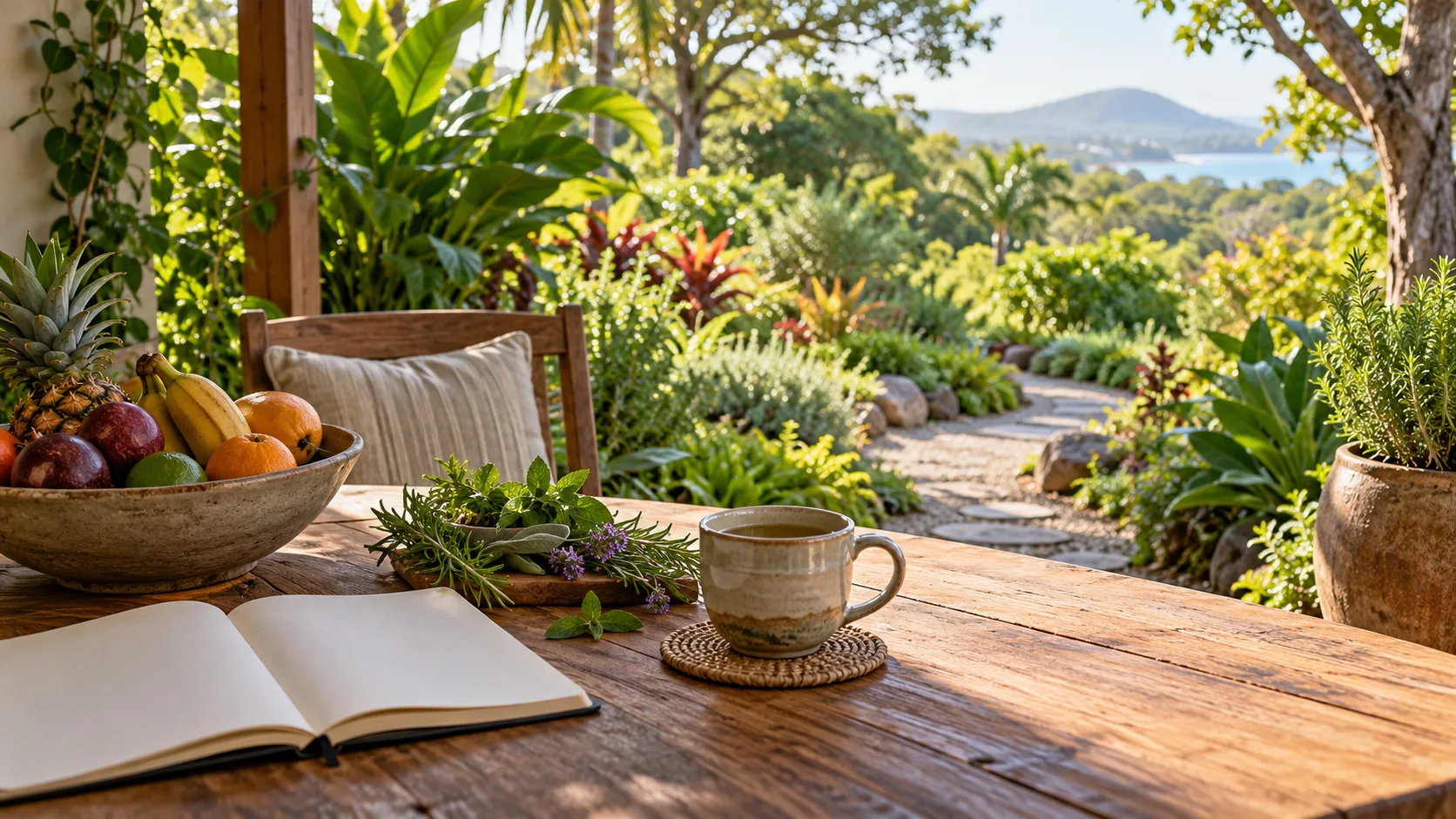
A consultation often begins with a symptom: tiredness that will not lift, unsettled digestion, difficulty sleeping, or a feeling that something has changed. Behind that concern is a person with a history, a home, relationships, responsibilities and hopes for the future. Understanding their health means making room for that larger story.
Wholistic Naturopathy is the approach I use to bring these relationships into view. It considers the body as a living, adaptive ecosystem and asks how we can support the conditions in which health, vitality and resilience become more possible. Food, movement, rest, emotional experience, environment and conscious awareness all have a place in that conversation.
Why I use the word wholistic
You will also see the familiar spelling holistic throughout this website. Both words point towards a whole-person approach. I use wholistic deliberately because it keeps the whole in view: the person, their lived experience and their relationship with the living world.
For me, this includes the practical realities of daily life. A food plan has to suit a person's budget and digestion. A movement practice has to fit their capacity. Advice about rest needs to acknowledge caring responsibilities, work and housing. An approach becomes useful when it can meet someone where they are.
Wholistic Ecology provides the wider philosophical foundation for this work. I define it as the study and practical cultivation of the relationships, conditions and adaptive capacities through which people, communities and living systems maintain vitality and regenerate. Wholistic Naturopathy applies that perspective to individual care.
The body is always responding
Consider how differently you may feel after several nights of disrupted sleep compared with a period of adequate rest. The same person encounters the day with a different capacity. Sleep supports many aspects of physical and mental health, including attention and emotional wellbeing [1]. Our circumstances and our physiology are continually meeting.
This is why I am interested in patterns as well as isolated events. When did the difficulty begin? What else was happening? Which changes have helped? Which concerns need medical assessment? There may be several contributing factors, and a careful explanation often takes time to develop.
The naturopathic principle Vis Medicatrix Naturae, traditionally translated as the healing power of nature, expresses respect for the body's capacities for regulation and repair. Those capacities have limits. Supporting them can involve nourishment and rest, and it can also involve medicines, investigations, rehabilitation or specialist care.
What we explore together
A whole-person consultation creates space to discuss your main concern, relevant health history, current medicines and supplements, eating patterns, sleep, movement, stress and the environments in which you live. Existing diagnoses and investigation results help to guide safe decisions. Your own observations also matter.
From there, we identify priorities together. Depending on your circumstances, support may include nutritional guidance, Western herbal medicine, practical lifestyle changes, bodywork or awareness practices. The choice should follow the individual situation and the evidence relevant to the proposed intervention.
Natural medicines deserve the same care as other active treatments. Herbs and supplements can interact with medicines and may be unsuitable in pregnancy, before surgery or with particular health conditions. More products do not automatically mean better care. Sometimes the most useful plan is a simpler one, coordinated with your other practitioners [2].
Intuition and evidence in conversation
I value the intuitive sense of both practitioner and person. Experience can draw our attention to a pattern before we have fully articulated it. Someone may notice that a particular pace of life leaves them depleted, or feel that they need quiet, movement or contact with nature.
We can respect that experience and explore it carefully. I treat intuition as an invitation to ask better questions, observe and discuss possibilities. It does not need to carry the burden of being an infallible diagnosis. Research, clinical reasoning and appropriate investigations help us assess explanations and make decisions.
Different kinds of knowledge answer different questions. Research can help estimate whether a treatment works and what harms it may cause. A person's account tells us what their experience is like and what matters to them. Traditional practice provides historical context and possibilities for enquiry. Clear care recognises both the contribution and the limits of each.
What I mean by imbalance
In everyday practice, imbalance can describe a pattern in which demands and recovery are poorly matched, or where normal regulation appears disrupted. Homeostasis is the physiological maintenance of internal conditions within workable limits. An identified disorder of that regulation needs an explanation appropriate to the actual condition.
The word also has a history in kinesiology and Polarity Therapy, where it may refer to perceived energetic flow, tension or the person's felt sense of coherence. I retain that language while making its context clear. Energetic descriptions are part of those traditional frameworks; they are not interchangeable with a laboratory finding or a medically established mechanism.
Similarly, a change in a muscle-testing response does not establish a food allergy, nutrient deficiency or disease. Those questions require appropriate clinical assessment and, where indicated, validated tests. A broader perspective is strongest when its different observations are described accurately.
A practical beginning
You do not need to change everything before asking for support. Begin with the concern that is most affecting your life. Bring a list of medicines and supplements, relevant results and a few observations about what makes things better or worse. Together we can work towards a manageable plan and agree how to review it.
Progress might mean steadier daily routines, improved function, better understanding of a difficulty or timely referral for further assessment. It should be meaningful to you, rather than measured only by how closely you follow a programme.
My intention is to help people become more informed participants in their own care, with an approach that honours nature, experience and careful enquiry. Health unfolds within a life. That is where our work begins.
Explore further
Explore Vital Health Roots at https://vitalhealthroots.com/. For individual support, use the contact form at https://wholisticnaturopath.com.au/contact.
Sources and further reading
[1] National Heart, Lung, and Blood Institute. Why Is Sleep Important? https://www.nhlbi.nih.gov/health/sleep/why-sleep-important
[2] National Center for Complementary and Integrative Health. Naturopathy. Background on approaches, evidence and safety; professional arrangements described there are US-specific. https://www.nccih.nih.gov/health/naturopathy
[3] Schwartz SA et al. A double-blind, randomized study to assess the validity of applied kinesiology as a diagnostic tool and as a nonlocal proximity effect. Explore (2014). https://pubmed.ncbi.nlm.nih.gov/24607076/
[4] Australasian Society of Clinical Immunology and Allergy. Allergy Testing. https://www.allergy.org.au/patients/allergy-testing/allergy-testing
A note on individual care
This article offers general education and explains my practice philosophy. It does not diagnose a condition or prescribe treatment. Persistent, new or worsening symptoms deserve appropriate assessment; urgent symptoms require urgent medical care.